Newsletter Subscribe
Enter your email address below and subscribe to our newsletter

 ByJohn A
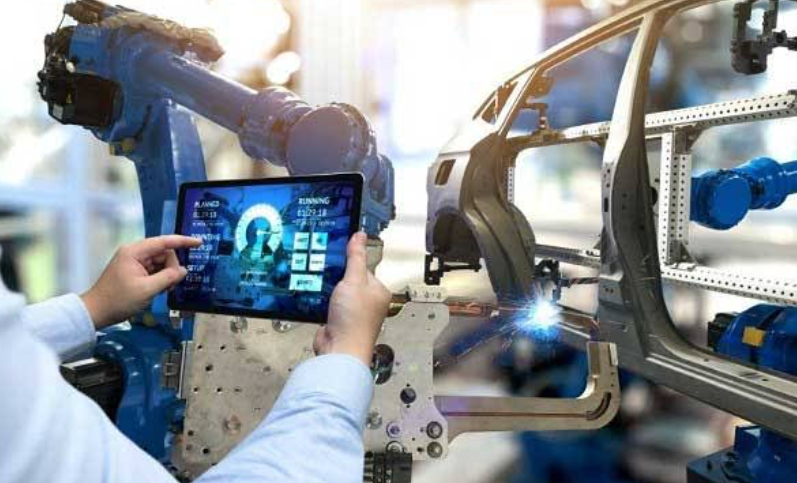
Artificial intelligence is reshaping smart manufacturing by turning data into actionable insights across the production lifecycle. It enables predictive maintenance, autonomous decision-making, and continuous optimization that align supply with demand while reducing waste. Governance, data provenance, and human-centered design build transparency and trust. Technologies must be chosen for measurable outcomes—quality, throughput, flexibility—supported by robust KPIs and risk management. The pathway forward demands disciplined execution and a clear vision that prompts further exploration.
AI drives smart manufacturing by infusing data-driven insights into every stage of the production lifecycle. Operational ecosystems evolve through predictive analytics, autonomous decision-making, and continuous optimization, aligning supply with demand while reducing waste. The approach foregrounds data ethics and human centered design, ensuring transparency and trust. This framework empowers teams with freedom to innovate, while maintaining responsible, scalable, future-ready operations.
Choosing the right AI technologies for a factory requires a clear mapping between business goals, data readiness, and operational constraints; by rigorously aligning use cases with quantifiable outcomes, manufacturers can prioritize solutions that deliver measurable improvements in quality, throughput, and flexibility.
AI governance and data provenance guide responsible choices, minimizing implementation challenges, shaping vendor selection, and addressing ethical considerations for sustainable automation freedom.
Measuring impact in AI-driven manufacturing hinges on translating technology deployments into tangible business value through defined metrics, robust ROI calculations, and risk-aware governance. In this frame, KPIs illuminate efficiency, quality, and uptime, while ethical risk and data governance govern trust, compliance, and accountability. Strategic dashboards translate insights into actionable decisions, enabling scalable adoption and freedom to innovate without compromising resilience or stakeholder interests.
As autonomous systems scale, governance frameworks codify privacy governance, ensuring transparent data use and consent while maintaining operational agility.
With a focus on energy efficiency, intelligent optimization reduces waste, lowers emissions, and supports resilient, freedom-loving enterprises that align innovation with societal well-being.
The approach democratizes decision making by equipping frontline workers with real-time insights, enabling autonomous problem-solving. It advances frontline empowerment through transparent dashboards, contextualized analytics, and inclusive governance, aligning data-driven strategies with individual autonomy and organizational freedom.
Hidden costs emerge from data quality gaps and integration complexity, while implementation risks include vendor lock-in and scalability challenges. Sustainability concerns arise from energy usage and lifecycle impacts, shaping strategic decisions about governance and transparent ROI for freedom-minded manufacturers.
AI handles legacy equipment through sensorless monitoring and legacy integration, using data-driven inference from existing signals, machine history, and process metrics to enable predictive insights, autonomous optimization, and strategic freedom for sustainable modernization across heterogeneous assets.
AI ethics can influence supplier selection and contractor selection by embedding transparent decision making, considering frontline workers, democratizing insights, and prioritizing upskilling maintenance for legacy equipment, sensors, and data-driven strategies that empower freedom-focused, strategic collaboration.
See also: Artificial Intelligence in Shopping Recommendations
Staff should pursue an upskilling roadmap emphasizing AI competencies, enabling proactive maintenance decisions; a data-driven, strategic approach charters a vision for autonomous diagnostics, empowering teams with adaptable skills that support freedom-driven operational resilience and continuous improvement.
In the grand theater of smart manufacturing, AI performs with data-driven precision, orchestrating predictive maintenance, autonomous decisions, and continuous optimization. Yet the real act hinges on governance, provenance, and human-centered design that temper ambition with accountability. As factories quantify quality, throughput, and flexibility, they must not mistake speed for wisdom. The future favors those who couple strategic technology choices with transparent risk management, sustainable practices, and measurable ROI—delivering resilient, value-driven ecosystems that endure beyond the next upgrade.